
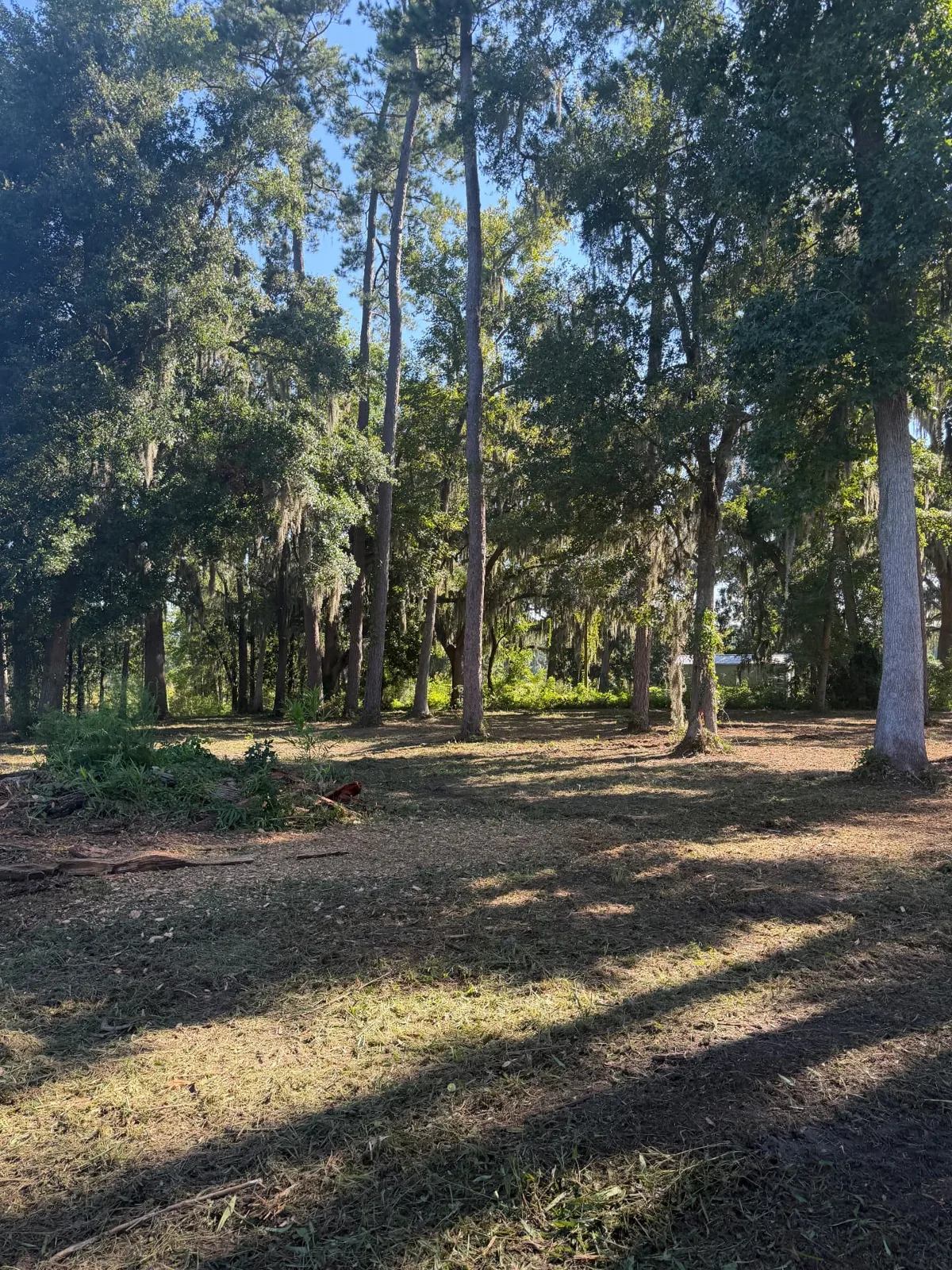
Forestry Mulching in Coastal Georgia
Brush, underbrush, and small trees ground in place. No burn piles, no hauling.
What Forestry Mulching Is
Forestry mulching opens up overgrown ground without digging out everything on the property. A skid steer with a mulching head cuts and grinds vegetation in place, leaving a layer of mulch on the ground instead of a brush pile to deal with later.
We use it for brush, underbrush, palmetto, vines, and small trees on Coastal Georgia lots. We walk the property first, look at access and what is growing, and mark the trees you want to keep. Larger trees get cut and removed separately.
Forestry Mulching vs Traditional Land Clearing
Mulching leaves the vegetation on the property as ground cover. There are no burn piles or debris hauling for the mulched brush, and less soil disturbance because we are not pulling out the root mat. The mulch layer helps control erosion and hold moisture, and good trees can stay.
If you are building a slab or house pad, roots still need to be grubbed. Larger trees require separate cutting and removal. See Land Clearing for building-site clearing and root removal.
When Forestry Mulching Makes Sense
- Overgrown lots where you cannot see or walk the property.
- Thick underbrush, palmetto, and vines beneath trees you want to keep.
- Fence line and property line clearing with agreed limits marked first.
- Trails and access paths through wooded ground.
- Hunting land and food plots that need brush opened up.
- Pasture reclamation where woody growth has taken over.
- Opening a lot to see the property before buying or selling.
- Right of way clearing with boundaries and any required permissions confirmed.
Common Forestry Mulching Projects
- Overgrown residential lots
- Underbrush and palmetto clearing
- Fence and property lines
- Trails and access paths
- Hunting land and food plots
- Pasture reclamation
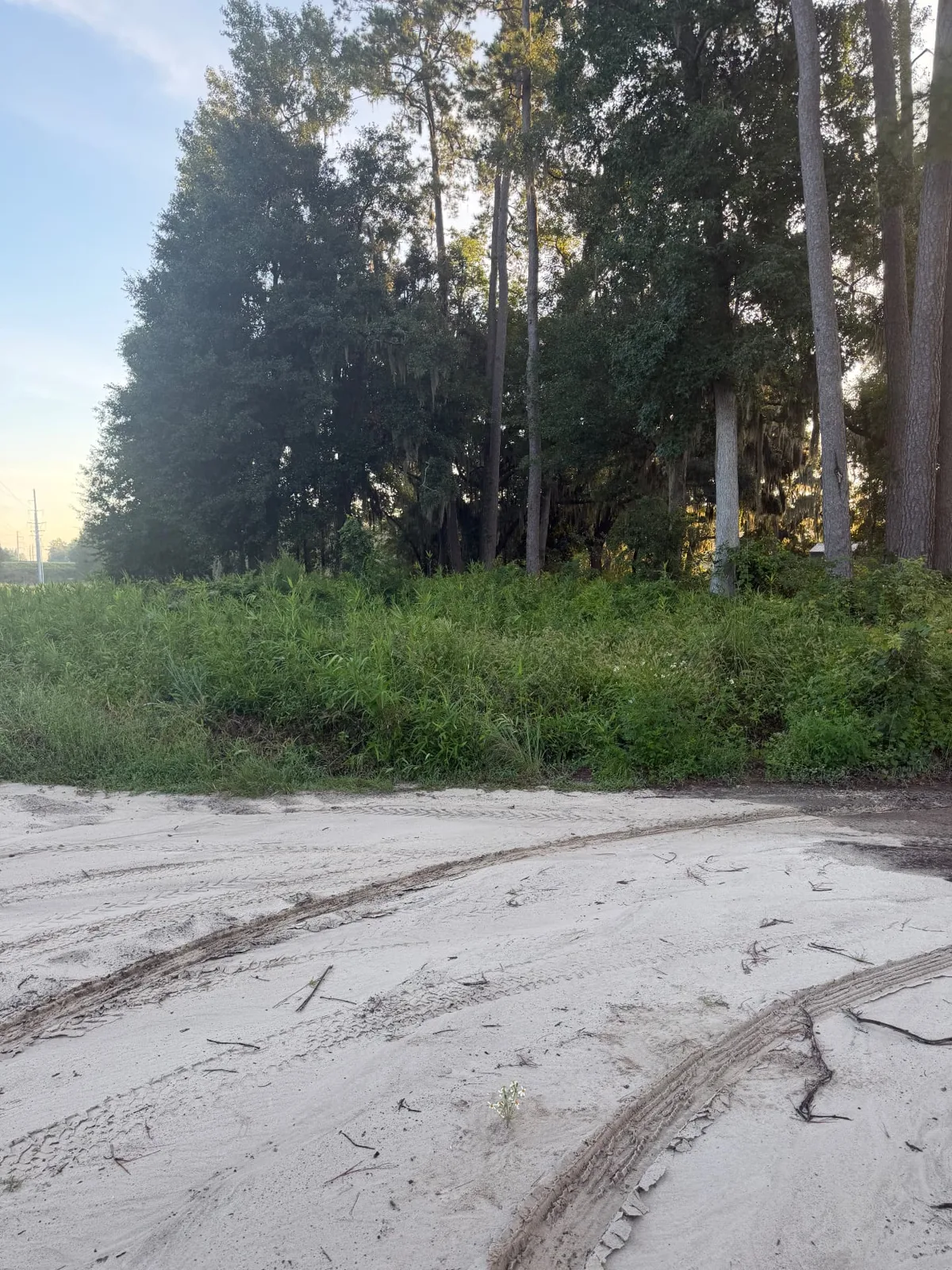
Before and After
How the Job Works
- 1
Walk and flag the property
We walk the limits with you, check access, and flag what stays before the machine starts. Utilities and any restricted areas need to be identified first.
- 2
Mulch the brush and small trees
The skid steer with a mulching head works through the vegetation in place. We keep the work inside the agreed limits and leave the marked trees alone.
- 3
Handle larger trees separately
Larger trees are cut and removed separately, not treated as something the mulching head can handle. We agree on that work when we walk the site.
- 4
Leave the mulch evenly spread
We finish with the ground covered in an even layer of mulch rather than burn piles. You can see the ground and use the paths that have been opened up.
Equipment We Use
- Skid steer with a mulching head for brush, underbrush, palmetto, vines, and small trees
- Separate cutting and removal work for larger trees, agreed during the site visit
Why Experience Matters Here
Mulching the right part of a lot saves disturbing ground that does not need to be dug up. We look at where you need access, which trees should remain, and what you plan to do with the property next.
A mulched lot is not a finished building pad. Stumps and roots remain below the surface, so a slab or house pad still needs grubbing and proper site preparation. We explain that difference before you pay for work that does not fit the end use.
Forestry Mulching Questions
How much does forestry mulching cost per acre?
It depends on vegetation density, tree size, and access. Thick underbrush and tight access take different work than an open lot. We walk it and give you a real number rather than guessing a price per acre.
What is the difference between forestry mulching and land clearing?
Forestry mulching grinds brush and small trees in place and leaves mulch on the ground. Traditional land clearing removes trees, stumps, and roots and deals with the debris separately. Which one fits depends on whether you need open ground or a building site.
Can I build on land that has been mulched?
Not without further preparation. Mulching leaves stumps and roots below the surface. For a slab or house pad, those roots still need to be grubbed and the ground properly prepared and compacted.
What happens to the mulch?
It stays spread across the ground and breaks down over time. The cover helps control erosion and hold moisture. It is not structural fill and does not replace a compacted building base.
Can you mulch around trees I want to keep?
Yes. We walk the property with you and flag the trees and areas that stay. Access and spacing determine where the skid steer can work without crowding those trees.
Is forestry mulching the same as bush hogging?
No. Bush hogging cuts grass and light brush. Forestry mulching handles thick underbrush and small trees by grinding the vegetation in place.
Do I need a permit?
Check with your county before clearing. The answer depends on the location and scope, including any protected areas or right of way. We can help you understand the scope of the proposed work so you know what to ask.
Where We Do Forestry Mulching
We cover all of Coastal Georgia for forestry mulching, including Midway, Hinesville, Richmond Hill, Savannah, Pooler, Ludowici, and Pembroke, plus Liberty, Bryan, Chatham, and McIntosh County.
Need Forestry Mulching in Coastal Georgia?
Call or send us the details and we will get you a straight estimate.